
Do your hands feel stiff when you wake? Are swollen joints making it difficult to grip a cup, fasten buttons or walk comfortably? Does fatigue make everyday tasks feel harder than they should?
Joint pain can have many causes. When pain comes with persistent swelling, prolonged morning stiffness or symptoms in several joints, it is important to seek medical assessment.
Rheumatoid arthritis can affect both movement and energy. Understanding the condition — and the different roles of medical treatment and rehabilitation — can help you take the next steps toward managing it.
What is rheumatoid arthritis?
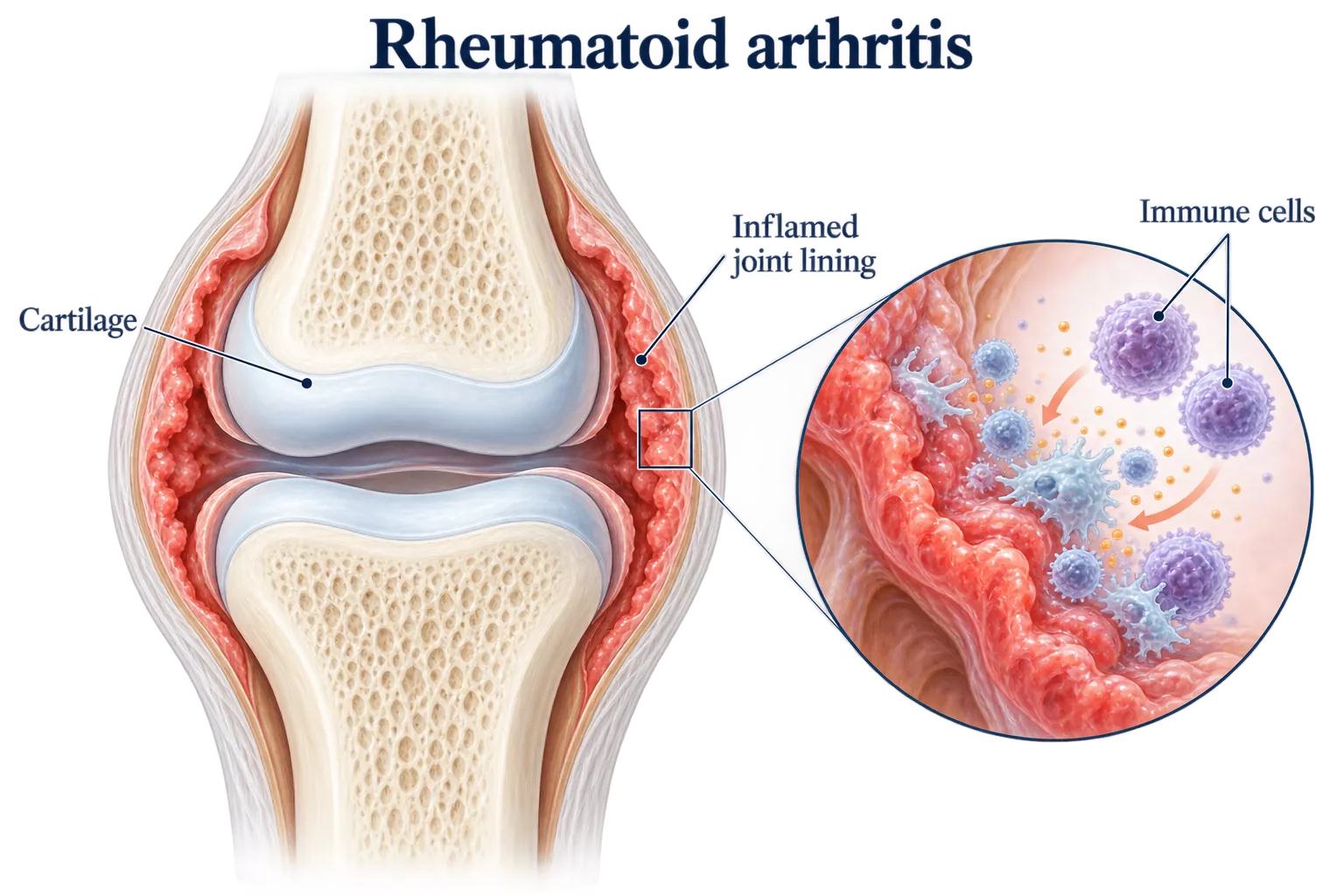
Rheumatoid arthritis, often shortened to RA, is a chronic autoimmune condition. The immune system mistakenly attacks healthy tissues, causing inflammation that commonly affects the lining of the joints.
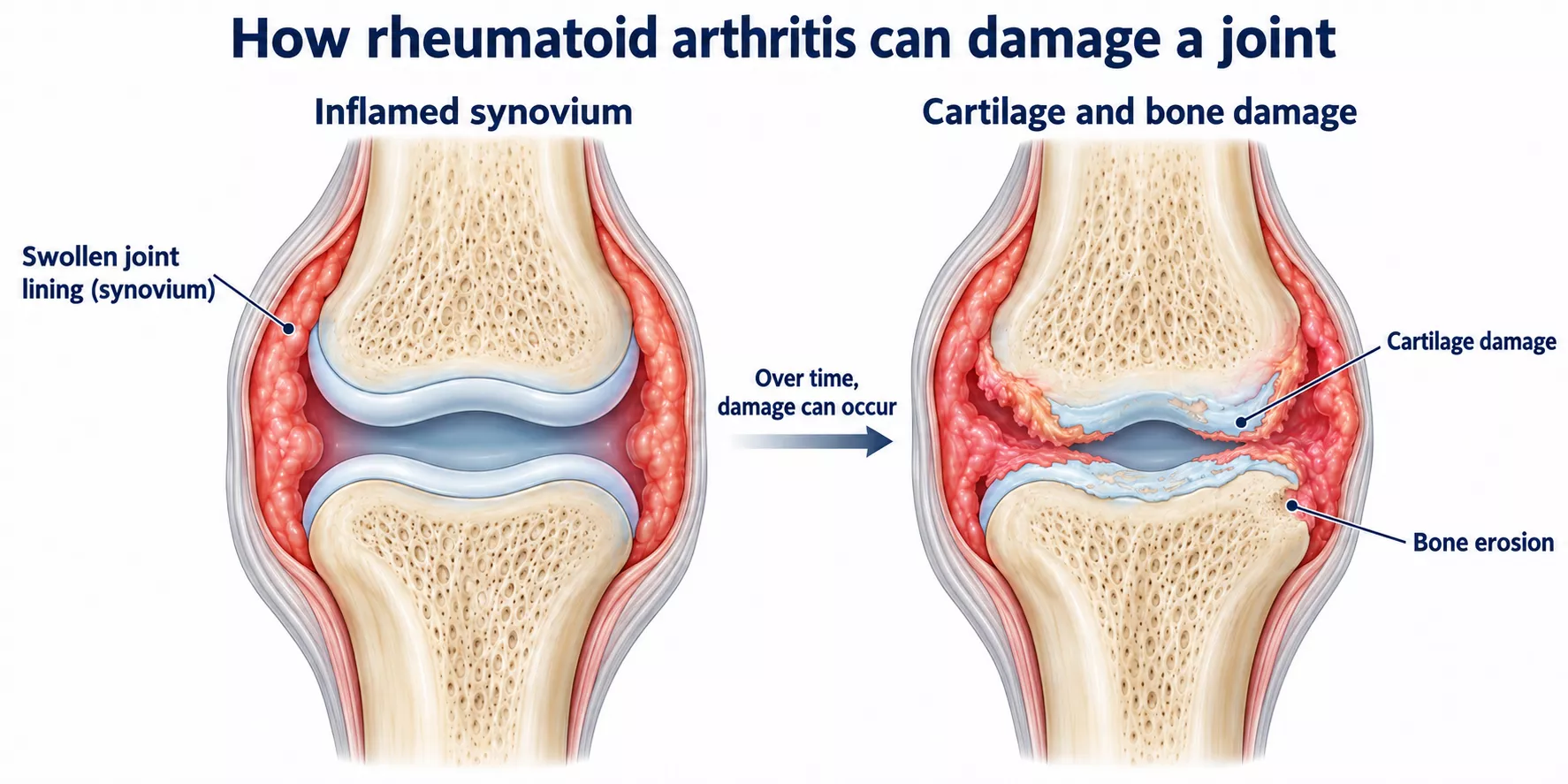
This inflammation can lead to pain, swelling and stiffness. Without effective treatment, it can damage joints over time. RA may also affect other parts of the body.
Symptoms often involve the hands, wrists and feet, although other joints can be affected. The condition varies between individuals, with periods of increased symptoms called flares. Treatment aims to control disease activity and achieve remission or low disease activity.
Common symptoms of rheumatoid arthritis
Symptoms that may prompt someone to seek care include:
- Tender, swollen or warm joints.
- Pain during movement or at rest.
- Morning stiffness that lasts longer than 30 minutes.
- Difficulty making a fist or using the hands.
- Unusual tiredness or low energy.
- Occasionally, reduced appetite or a low-grade fever.
Symptoms often occur on both sides of the body, but this pattern is not present in every person or at every stage.
For some people, the main concern is hand function. For others, painful feet, difficulty walking or fatigue have the greatest impact.

Why early medical assessment matters
Persistent joint swelling should not be dismissed as a normal consequence of ageing or a busy lifestyle. NICE recommends specialist referral for suspected persistent inflammation of the joint lining, known as synovitis.
Urgent referral is particularly important when small joints of the hands or feet are affected, or when several joints are involved. Normal inflammation markers or negative rheumatoid arthritis antibody tests should not prevent an appropriate referral.
If you are concerned about these symptoms, contact your family doctor. Physiotherapy can support your care, but suspected inflammatory arthritis also needs medical investigation.
When to seek prompt medical care
Seek prompt medical assessment for persistent joint swelling, warmth or stiffness lasting more than 30 minutes in the morning, especially when several joints or the small joints of the hands and feet are involved. A sudden, hot, red and very swollen joint with fever may indicate infection or another serious problem and needs urgent care. Contact your family doctor or rheumatology team rather than waiting for a physiotherapy appointment if these symptoms are new or worsening.
How is rheumatoid arthritis diagnosed?
There is no single test that confirms or excludes RA in every person.
Doctors consider the pattern of symptoms, examine the joints and may request blood tests or imaging. Blood tests can include rheumatoid factor, anti-CCP antibodies and markers of inflammation. Some people with RA have negative antibody tests.
X-rays can help assess joint damage, while ultrasound or MRI may provide information about inflammation. Early X-rays may appear normal. The findings must be interpreted together with the clinical assessment.
Before your appointment, it can help to record which joints are affected, how long morning stiffness lasts and which activities have become difficult.
How is rheumatoid arthritis treated?
Medical treatment is essential for controlling the inflammation that drives RA.
Disease-modifying antirheumatic drugs, or DMARDs, are used to control disease activity and reduce the risk of damage. Your rheumatologist selects and monitors treatment. Medication may change depending on your response and health needs.
Pain-relieving treatments may also be used, but relieving pain alone does not replace treatment of the underlying disease. Ongoing medical reviews help assess disease activity and medication safety.
Physiotherapy works alongside this medical care, helping address movement, strength and everyday function. It does not replace the medical treatment of rheumatoid arthritis.
How physiotherapy can help with rheumatoid arthritis
NICE recommends access to physiotherapy for people with RA to support fitness, regular exercise, joint flexibility, strength and functional difficulties.
Your rehabilitation plan should reflect your current symptoms and priorities.

1. Assessing the activities that are difficult
A useful assessment begins with what you need to do.
Are stairs difficult? Does carrying a shopping bag aggravate your wrist? Are you struggling to stand from a chair?
These concerns help guide the examination and create meaningful goals. Progress can then be measured through everyday tasks, alongside changes in symptoms.
2. Developing an individualized exercise plan
Your physiotherapist may consider mobility, strengthening and general fitness exercises, with the starting level adjusted to your condition.
For example, a person who wants to improve walking tolerance may need a different programme from someone whose main concern is hand function.
Hand strengthening and stretching programmes require appropriate assessment and should be delivered by a practitioner with relevant training.

3. Making the plan practical
A programme is easier to follow when it fits your routine.
Your physiotherapist can help you decide when to exercise, how to divide sessions and what changes to discuss if symptoms increase. Clear instructions can reduce uncertainty about how to begin and progress.
4. Coordinating additional support
Difficulties with dressing, cooking or work tasks may benefit from occupational therapy. NICE recommends access to occupational therapy when RA affects everyday activities or hand function.
The aim is to connect you with the support that matches your needs.
What should you do during a flare?
A flare may require adjustments to both activity and medical treatment.
Contact your rheumatology team if symptoms worsen significantly or are not settling. Do not stop or change prescribed medication without their advice.
Ask your physiotherapist for a plan that explains which activities to modify, how to adjust exercise and when to arrange reassessment. An activity that was manageable last week may need a different approach during a period of increased symptoms.
The goal is to avoid guessing or repeatedly pushing through a programme that no longer suits your condition.

Preparing for your physiotherapy appointment
Bring a list of your medications and any relevant medical reports. Think about the two or three activities you most want to improve.
Useful questions include:
- How should my exercise plan reflect my current symptoms?
- What should I change during a flare?
- Which improvements should we track?
- When should I contact my doctor or rheumatology team?
- Would another professional help with my daily activities?
Understanding the purpose of your plan makes it easier to participate in your care.
Rheumatoid arthritis physiotherapy in Mississauga
If rheumatoid arthritis is affecting your mobility, strength or daily activities, physiotherapy can help you develop a rehabilitation plan alongside your medical treatment.
At Village Physiotherapy & Rehabilitation Centre in Mississauga, your concerns and goals guide the assessment: which movements are difficult, how symptoms affect your routine and what you want to do more comfortably.
Contact Village Physiotherapy to book an assessment and discuss rehabilitation suited to your needs.
Questions about your joints?
Call us or request an appointment online. We can help you take the right first step.
A note on this article
This article provides general education and is not a substitute for individual medical advice. It does not diagnose any condition and does not claim that physiotherapy replaces medical management of rheumatoid arthritis. Suspected rheumatoid arthritis requires medical assessment, and rehabilitation should be coordinated with appropriate medical care. Please contact the clinic to confirm which services and practitioner qualifications are currently available before booking.
Sources & further reading
- NIAMS — Rheumatoid Arthritis: Symptoms, Causes, and Risk Factors
- NICE — Rheumatoid arthritis in adults: management (NG100) Recommendations
- NIAMS — Rheumatoid Arthritis: Diagnosis, Treatment, and Steps to Take
- NHS — Rheumatoid arthritis overview
- NHS — Rheumatoid arthritis symptoms
- NHS — Rheumatoid arthritis causes
- NHS — Rheumatoid arthritis diagnosis
- NHS — Rheumatoid arthritis treatment
- Versus Arthritis — Rheumatoid arthritis
- Arthritis Society Canada — Rheumatoid arthritis
- APTA ChoosePT — Physical Therapy Guide to Rheumatoid Arthritis